
Cherokee County Arrest Records and Charges
Arrest records in Cherokee County come from the law-enforcement and detention side of a case. The Sheriff's Office is at 312 E. Frederick St., Gaffney, and the Cherokee County Detention Center is at 315 E. Dr. L.M. Rosemond Lane. The county detention center holds local and county inmates awaiting trial or serving sentences of 90 days or less. If a person was just arrested, custody or booking confirmation starts with the county inmate-search link from the detention page or the detention phone line, 864-487-2529.
Court charge records start after the arrest side. The Solicitor represents the State of South Carolina in criminal cases filed by law enforcement in Cherokee and Spartanburg counties, while the Clerk of Court keeps the General Sessions case file. A charge record may show the charge description, statute or code reference, warrant or summons number, arresting agency, bond, first court date, prosecutor, and current charge status. The full case file and outcome belong in Cherokee County criminal court records.
This distinction matters. A booking entry may confirm custody, but it does not prove a final court result. A charge may be pending, amended, reduced, dismissed, or nol prossed. A conviction requires a guilty plea, guilty verdict, or other final guilty disposition shown in the court record.
Search Cherokee County Arrest Records
The best first stop depends on timing. For a recent arrest, use the Detention Center inmate-search link published on the county detention page, then call the Detention Center if the person is not listed. For filed charges, use the Cherokee County Public Index. For upcoming hearings, use Cherokee County Court Rosters. For a South Carolina criminal-history product, use SLED CATCH, keeping in mind that SLED says wanted persons are not included in CATCH reports.
- Check local custody first if the arrest is recent and booking status is the main question.
- Search the Public Index by case number or defendant name once the charge reaches court.
- Open the case detail and compare each charge, count, bond entry, hearing date, and disposition.
- Use Court Rosters for hearing schedules and the Clerk of Court for certified copies.
- Use SLED CATCH only for statewide criminal-history scope, not for active warrants or jail custody.
The Seventh Judicial Circuit Public Defender page explains local defense eligibility and tells applicants to bring warrants, tickets, and court-date notices when available.
That office is not a records search office, but its instructions show which papers matter after an arrest.
Cherokee County Charges After Arrest
Charges after arrest move through formal charging documents. South Carolina local records may refer to warrants, summonses, indictments, solicitor filings, or other case documents depending on the court and case type. The key is not the label alone. The important point is whether a formal accusation has been filed with the court and whether later docket entries change or resolve that accusation.
| Document Type | Who Uses It | What It Does |
|---|---|---|
| Complaint or summons | Law enforcement, summary court, or prosecutor depending on the matter. | Starts or supports a lower-level charge, appearance, or response duty. |
| Information or solicitor filing | Prosecutor in a criminal case. | States the formal charge or amended charge pursued by the State. |
| Indictment | Grand jury and prosecutor for serious criminal matters. | Accuses the defendant of a felony or serious offense for General Sessions prosecution. |
The Solicitor's Office is listed at 202 N. Petty St., Gaffney, phone 864-487-2576. The county Solicitor page identifies Barry Barnette as Solicitor and lists attorneys, victim advocate staff, court roster links, public index links, and program links. The solicitor prosecutes; the Clerk preserves the case record.
Cherokee County Charge Status Terms
Charge status can change more than once. An arrest may begin with one suspected offense, but the filed court charge may differ after review by the prosecutor. A later plea agreement can reduce a count. A motion or hearing can produce dismissal. The docket may also show that the prosecutor nol prossed a charge, meaning the State declined to proceed on that count.
| Status | What It Means |
|---|---|
| Pending | The charge is still open and no final disposition appears. |
| Amended | The charge text, code, degree, or count was changed by later filing or order. |
| Reduced | The charge was lowered, often as part of plea, review, or negotiated resolution. |
| Dismissed | The court ended the charge without a conviction on that count. |
| Nolle prossed | The prosecutor declined to continue the charge, subject to the wording of the court entry. |
| Disposed | The charge has a recorded outcome, which must be read with the plea and sentence fields. |
Do not read one status field in isolation. Match the charge line to the docket entry, disposition date, and sentence entry before relying on it.
Cherokee County Charges vs Convictions
A Cherokee County arrest record or charge record can be public even when no conviction occurred. A person can be arrested and later not charged. A filed charge can be dismissed, amended, reduced, or nol prossed. A conviction is different because it reflects a final guilty plea or guilty finding.
| Point | Charge | Conviction |
|---|---|---|
| Stage | Accusation after arrest, citation, warrant, summons, or indictment. | Final guilty outcome after plea or trial. |
| Proof level | Based on probable cause or charging decision. | Based on plea, verdict, and court judgment. |
| Where to verify | Charge line, solicitor filing, warrant, summons, or indictment. | Disposition, sentence, judgment, and docket entries. |
| Can appear without the other? | Yes, charges may appear without conviction. | A conviction should tie back to a charge or count. |
The South Carolina Public Sex Offender Registry is a separate SLED registry with name search, geographic search, notifications, resources, and removal information.
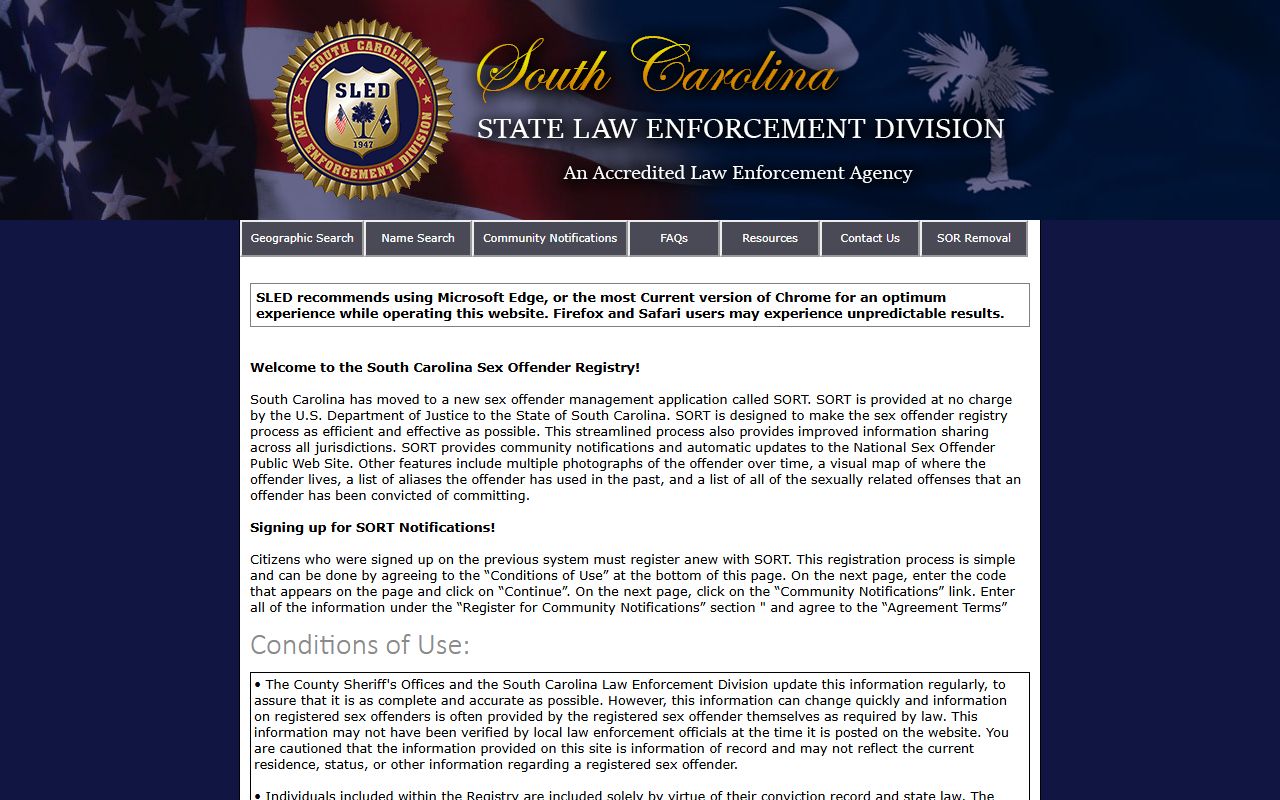
Registry status should not be confused with a new arrest search or a full Cherokee County court case file.
Statewide Cherokee County Charge Sources
Several statewide tools can help, but each has a different job. SLED CATCH provides South Carolina-only criminal-history information and excludes wanted persons. SLED SCOR handles public sex-offender registry searches. SCDC covers sentenced state-prison inmates, not Cherokee County jail detainees. South Carolina VINE gives custody and criminal-case notification options and is useful for status changes.
Access note: A statewide source may confirm history, custody, registry, or notification data, but the Cherokee County court record remains the source for filed local charges and dispositions.
The South Carolina VINE service offers custody and criminal-case notifications by telephone, email, or text message.
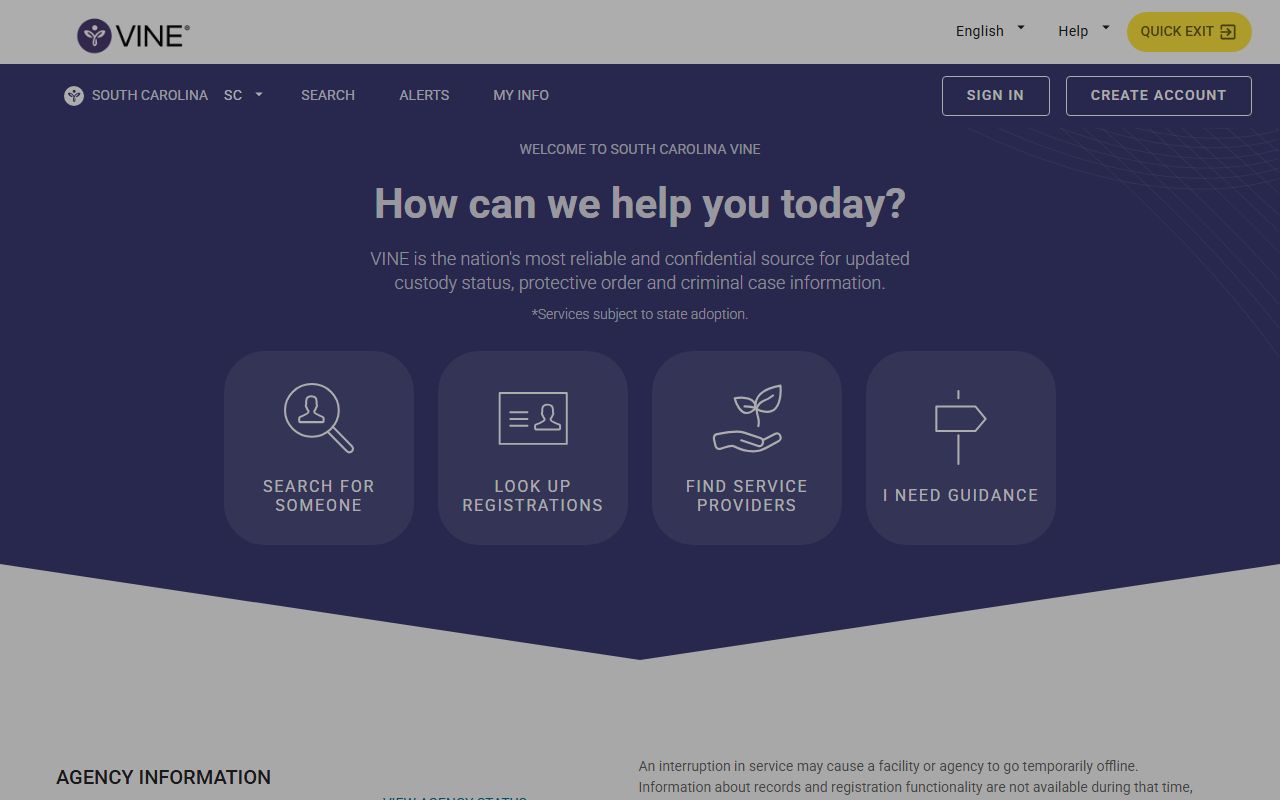
VINE can support victim and custody notification, but it does not replace the Clerk's filed court records.
Cherokee County Arrest Information Channels
The Sheriff's Office and Detention Center are the local channels for arrest and custody questions. Sheriff Steve Mueller is listed as sheriff, and the Detention Center phone is 864-487-2529. The county detention page says the center uses direct supervision, a central control room, more than 50 cameras, and LiveScan fingerprint technology that submits identification and criminal-history information electronically to SLED and the FBI.
The Cherokee County Sheriff SC mobile app is documented in Google Play and Apple App Store listings. The listings describe crime reporting, tip submission, interactive features, public safety news, and information. They do not advertise an app-only inmate roster, active warrant search, or records-request portal, and the app is not for emergency reporting. Call 911 for emergencies.
The South Carolina AG and SCDC announcement describes expanded VINE access and notification methods.
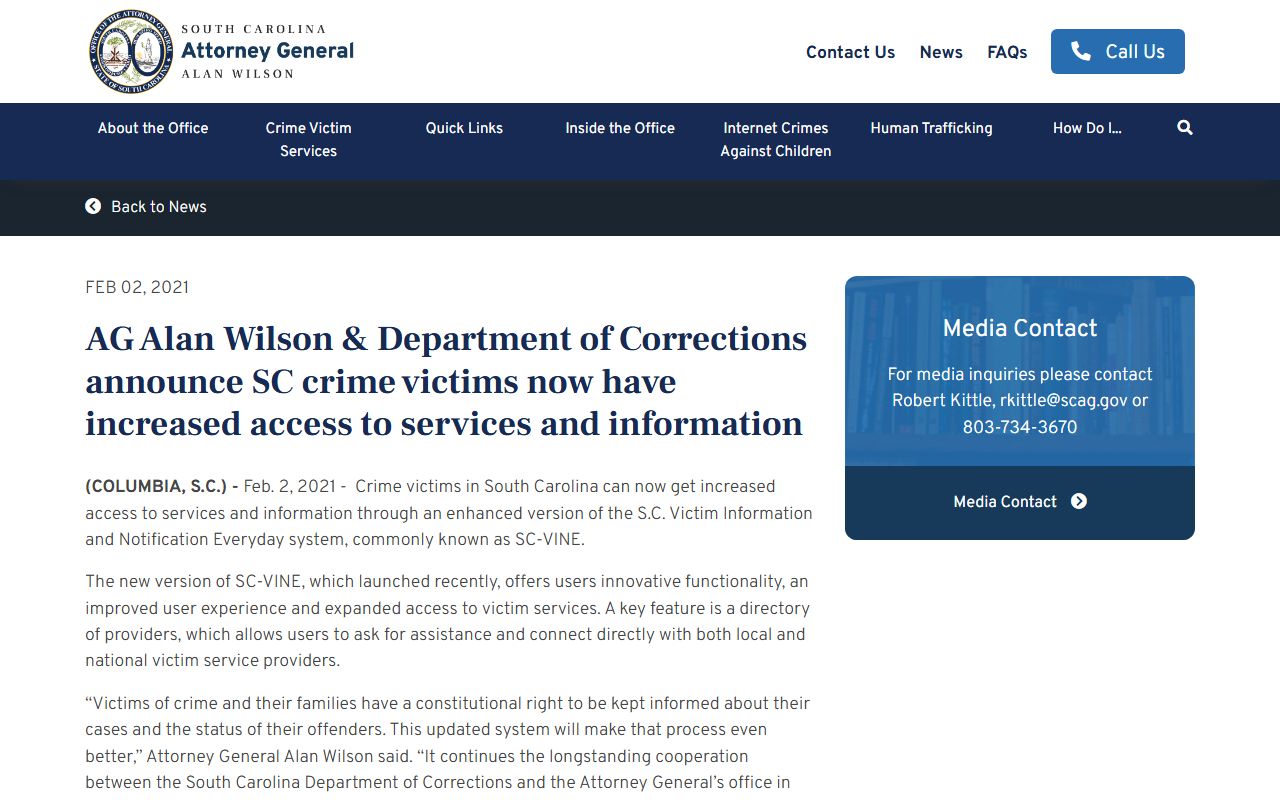
Use the app for sheriff information and tips, and use VINE or the jail phone for custody-notification questions.
Restricted Cherokee County Charge Records
Some arrest and charge records are not fully public. Juvenile records are confidential under South Carolina juvenile law except for specific access or court order. Sealed or expunged records should not appear in routine public portal searches after the order is effective. Mental-health commitment records, protected personal identifiers, some family-related juvenile matters, and active investigative material can also be restricted.
| Record Type | Public Access Limit | Best Official Route |
|---|---|---|
| Juvenile charge | Generally confidential, with limited exceptions. | Family Court or attorney, not open public search. |
| Expunged charge | Removed from routine public view after the order is processed. | Seventh Circuit Solicitor or Clerk for order-related questions. |
| Sealed matter | Hidden or limited by court order. | Issuing court or Clerk, subject to the order. |
| Active investigation | May be withheld from public release. | Sheriff or prosecutor, subject to law and case status. |
The Public Defender page says that office does not expunge records and points people to a private attorney or the Solicitor's Office. The Clerk fee schedule lists a $35 expungement fee for dismissed, nol prossed, or not-guilty matters. Note: expungement eligibility is statute-specific and should be confirmed before relying on a public search result.
Cherokee County Court Charge Copies
Certified charge and disposition copies come from the court record custodian, not a third-party arrest search. For General Sessions files, contact the Cherokee County Clerk of Court at 125 E. Floyd Baker Blvd., Gaffney, SC 29340, phone 864-487-2571. For summary criminal or traffic-related charges, contact Cherokee County Magistrate / Bond Court at 312 E. Frederick Street, phone 864-487-2533, or Blacksburg Magistrate at 301 West Cherokee Street, Suite A, phone 864-839-2492.
For non-judicial sheriff records not found online, Cherokee County's FOIA page routes general requests to the county FOIA process and asks requesters to use the county FOIA request form. For judicial records outside routine copy access, South Carolina Rule 610 may apply. Court-charge records should not be requested from SLED unless the user needs a statewide criminal-history product rather than the local filed case.
Important: Arrest and charge information is not a consumer report and should not be used for FCRA-regulated screening without proper legal process.